
AML in Focus
AML in Focus: the regulatory newsflash
Your one-minute weekly briefing on the regulatory updates and enforcement actions that matter for AML and sanctions teams, with links to every source.

FinCEN AML Reform & FATF’s Focus on Cyber Fraud
The regulatory landscape is shifting toward effectiveness and measurable risk outcomes. This briefing explores FinCEN’s proposed AML reforms in the United States, which move away from one-size-fits-all compliance toward a stronger focus on high-risk activity, alongside FATF’s global push to combat the rise in cyber-enabled fraud.
As regulators demand smarter, faster, and more targeted responses, financial institutions must adopt adaptive, explainable AI to remain effective and defensible in a rapidly evolving threat landscape.

EU Anti-Corruption Harmonization & The FCA’s Shift to AI-Powered Supervision
The regulatory landscape has shifted. This briefing explores the European Parliament’s approval of unified anti-corruption rules to harmonize penalties across borders, alongside the FCA’s official adoption of AI for supervisory oversight in the UK. As regulators move toward faster, data-driven accountability, institutions must modernize their technology to remain defensible.
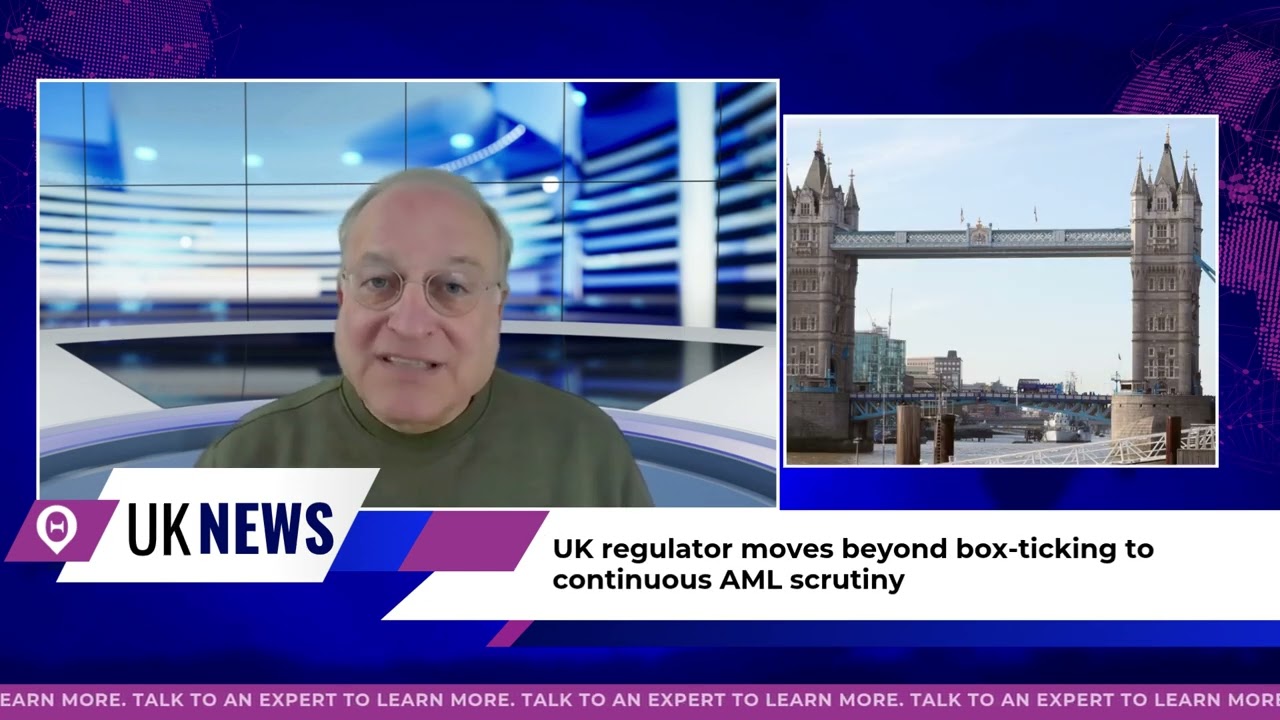
FinCEN $80M Penalty & FCA Regulatory Shift to Outcome-Based Compliance
FinCEN issued a record $80M penalty for US broker-dealer willful BSA violations, including 160+ unfiled SARs and falsified compliance records.
In the UK, the FCA is shifting to a dynamic Regulatory Priorities framework holding firms accountable for the real performance of their AML controls, including those of third parties.

Bot-Net Driven Laundering and Nigeria’s AI AML Mandate
With the Central Bank of Nigeria becoming the first to explicitly mandate AI and Machine Learning in its AML rulebook, the clock is ticking for financial institutions operating in the country.
In Spain, Europol uncovered a €4.7M laundering network trafficking human beings using bots, and 150 accounts across 11 countries. If your systems aren’t catching high-speed, automated patterns, you’re assuming a direct liability.

FCA takes over AML oversight for law firms as US FinCEN leadership signals pivot in sanctions strategy
The FCA is stepping in to oversee UK law firms, closing the 'gatekeeper' blind spot. A legal or accountancy firm with weak AML controls can now become a financial institution's third-party risk.
Meanwhile, US leadership changes at FinCEN signal a pivot in sanctions strategy.

FCA penalties hit £124M as FinCEN launches Whistleblower online portal
The UK’s Financial Conduct Authority has entered a new enforcement phase, with fines exceeding £124 million by the end of 2025 and increasing scrutiny on senior accountability.
At the same time, FinCEN has launched a whistleblower online portal offering financial rewards for tips related to fraud, money laundering, and sanctions violations.

FinCEN eases CDD rules as France Seizes €1B in Russia-linked assets
FinCEN has granted relief under the 2016 CDD Rule, reducing duplicative beneficial ownership re-verification requirements.
Meanwhile, French authorities have seized nearly €1 billion in assets linked to Russian oligarchs, exposing complex ownership networks.

FCA Intensifies AML reviews as Sweden’s criminal economy expands
The UK’s Financial Conduct Authority is reviewing more than 250 asset managers, signaling rising expectations around evidence-based AML controls.
Sweden estimates criminal activity now accounts for 5.5% of GDP, underscoring how financial crime increasingly operates at systemic scale.
Together, these developments reflect a clear shift toward stricter supervision and the need for audit-ready monitoring frameworks.

UK shuts down 11,000-company formation network as Europol exposes €300M card fraud operation
UK authorities shut down three firms that registered more than 11,000 UK companies for overseas clients without conducting AML checks, creating a false impression of legitimate business presence.
Meanwhile, Europol dismantled a €300M fraud and laundering network impacting 4.3 million cardholders.
AMLA begins data collection as OLAF exposes large-scale EU sanctions circumvention network
AMLA has launched a major data collection initiative to identify the 40 institutions that will fall under its direct supervision from 2028, marking a critical step toward unified, risk-based oversight across the EU.
OLAF coordinated an international investigation into large-scale sanctions circumvention, uncovering how goods declared as exports to Turkey were ultimately routed to Russia through third-country networks.

Sweden launches SecFin Africa to strengthen AML capacity building as Europe prepares for AMLA unified supervision
Financial crime is forcing regulators to act beyond borders. Sweden has launched the SecFin Africa initiative to strengthen AML systems across sub-Saharan Africa, warning of the massive economic cost of financial crime in the region.
Europe’s new AML Authority is ushering in a centralized risk-based supervision model through harmonized regulations. Together, these moves signal rising expectations for cross-border controls, documentation, and supervisory readiness.

FinCEN targets overseas laundering networks as Spain enforces historic €30m fine
U.S. criminal proceeds generated domestically can be laundered offshore in a matter of hours, quickly moving across jurisdictions and obscuring recovery efforts, according to FinCEN.
At the same time, recent enforcement in Europe shows how AML failures from a decade ago can resurface as significant regulatory penalties, reinforcing that compliance risk does not expire.

Money mule recruitment spikes in the UK while FinCEN enforcement cracks down on money services businesses (MSBs)
Criminals are increasingly recruiting money mules through social media in the UK, exploiting digital behavior and social networks to move illicit funds at scale.
At the same time, FinCEN is intensifying supervision of high-risk money services businesses, using large-scale data analysis to uncover connected laundering networks.

Sanctions risk escalates for U.S. banks as Venezuela-linked payments are reclassified
As geopolitical pressure around Venezuela intensifies, routine payments are being reclassified as high-risk overnight, leaving institutions exposed to sudden regulatory pressure.
From heightened oversight of Florida-Venezuela corridors to the rise of preventive de-risking by global institutions, the industry is moving toward a new reality. Behavior-based AI is becoming the most effective tool to stay resilient as threats and high-risk corridors evolve.

Fentanyl sanctions and terrorist designations accelerate global AML risk shifts
The U.S. has elevated illicit fentanyl trafficking to a national security threat, expanding enforcement and sanctions across supply chains and financial networks.
At the same time, the terrorist designation of Colombia’s Clan del Golfo is instantly reshaping customer, counterparty, and corridor risk across Latin America.

FATF flags Belgium narco-linked money laundering gaps while UK updates Syria sanctions guidance
FATF warns Belgium is struggling to tackle narco-linked money laundering.
Meanwhile, the UK updates Syria sanctions guidance, stressing trade restrictions and oversight of aid flows.
As Europe’s financial crime risks evolve, 2026 will demand sharper insight and faster adaptation from compliance teams.

FinCEN tightens remittance oversight as 2025 Basel AML Index shows shifting global risk
The U.S. is stepping up oversight of remittances, with FinCEN’s alert on cross-border funds transfers involving individuals without legal status in the country.
Meanwhile, the 2025 Basel AML Index highlights an uneven global picture with several low-risk jurisdictions slipping while higher-risk countries improve.
Together, these shifts reshape how institutions assess risk and reinforce why adaptive, behavior-based AI is becoming essential for regulatory readiness.

U.S. modernizes AML reporting rules as Europe broadens PEP scope
The U.S. is overhauling its anti-money laundering rules aiming to increase high-value reporting.
Meanwhile, Europe’s new AML Authority has broadened who counts as a politically exposed person (PEP), explicitly adding regional and local leaders and extending coverage to more family members. Discover why adaptive, behavior-based AI is becoming essential for regulatory readiness.

Rising enforcement: UAE expands AML regime while UK targets micro-laundering hubs
The UAE has introduced a tougher AML law following its exit from the FATF Grey List, expanding oversight to tax evasion, digital assets and proliferation financing.
Meanwhile in the UK, authorities raided nearly 3,000 high-street shops in one of the country’s largest AML crackdowns, uncovering new micro-laundering tactics across cash-heavy retailers.
Get insights on why adaptive, behavior-based AI now sits at the center of regulatory readiness.

UK tightens ID corporate checks as US Treasury cracks down on Mexican banks
The UK’s Companies House launches mandatory ID verification for company directors, while the U.S. Treasury’s unprecedented action forces three Mexican financial institutions to cease operations.
Get insights on why AI-driven detection now sits at the center of regulatory readiness.

AMLA clamps down on supervision gaps as FATF boosts Africa's financial credibility
In this week’s AML in Focus, Europe’s new AMLA kicks off with a mission to close long-standing oversight blind spots, while FATF’s latest update removes four African nations from the Grey List.
Get analysis from our financial crime and AI experts on why unified data, intelligent detection, and explainable AI now sit at the core of global regulatory expectations.

EBA warns on AI misuse as FCA ties compliance to market trust
AML in Focus debuts with Europe’s warning against careless RegTech adoption and the UK’s call to treat financial crime as a trust issue.
Get guidance from our financial crime and AI experts to stay ahead of regulatory pressure.

Protect the flow. Power the growth.
See how ThetaRay turns regulatory expectations into detection and investigation that hold up to scrutiny.